Programming
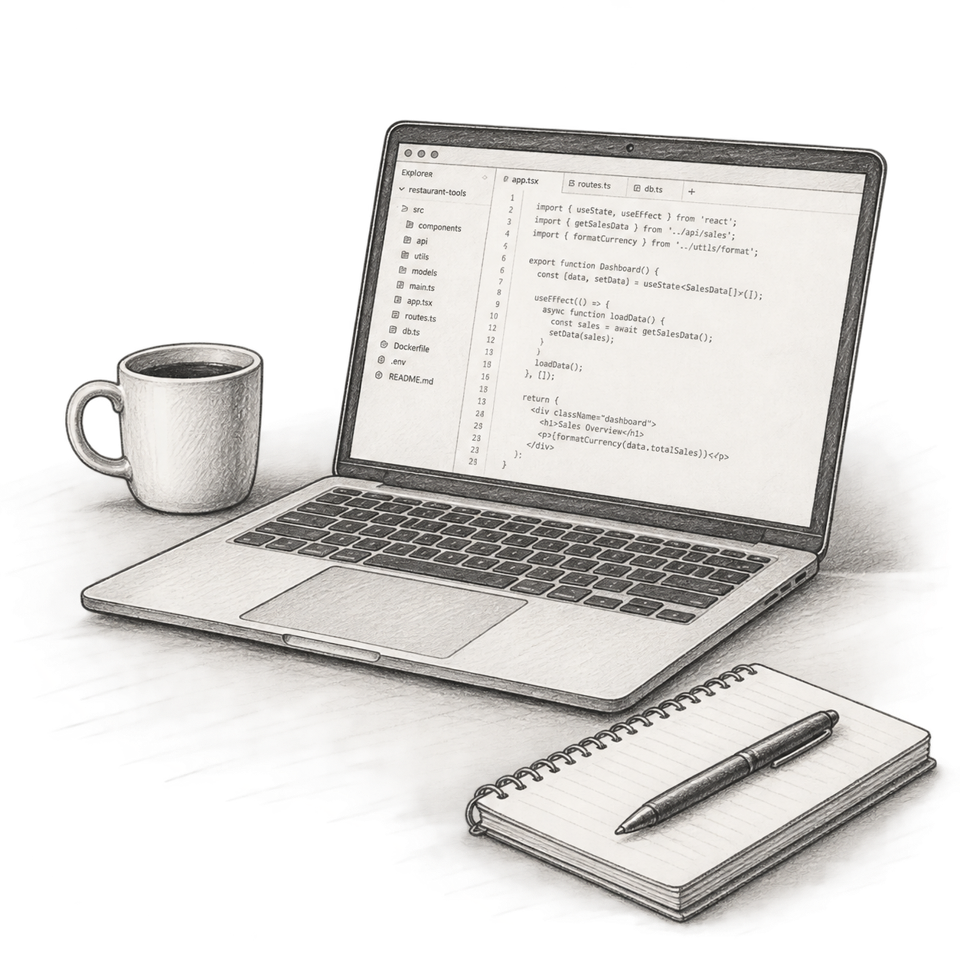
Building web apps, internal tools, automations, and small services with practical, maintainable code.
Self-taught software developer who learned programming while leading financial stewardship for two Chick-fil-A locations.
Read the storyA quick overview of the areas I keep coming back to: writing the software, understanding the systems around it, and using AI well enough to move faster as a solo developer.
Building web apps, internal tools, automations, and small services with practical, maintainable code.
Comfortable with Linux, Docker, servers, databases, SSH, and the pieces that keep software running.
Looking past the screen to understand workflows, constraints, business value, and where software actually helps.
Using agentic AI workflows to plan, build, review, and ship more effectively as a solo developer.
Little did I know I'd find myself tumbling down the rabbit hole for years to come.
I originally wanted to document the different reasons people believe in conspiracy theories. I looked at WordPress, but that sent me down a different path: how are websites actually made? That question led me to HTML, CSS, and then JavaScript. I opened YouTube, searched how to build a website, and started following along.
I understood that apps could run in the browser, but the server side confused me for a long time. I spent a lot of early mornings getting up around 4 a.m. to watch videos about MongoDB, Node.js, and eventually Go. At some point it clicked: the server was a separate computer sending the app to the browser and handling the data behind it. That opened the door to SSH, Linux, databases, and the system-level ideas behind real web applications.
During that time, I wrote a lot of code that never became useful. I had plenty of dead-end projects that looked good in my head but did not work in real life the way I imagined. One was a system to QR code our equipment and use those codes to submit maintenance requests. The idea made sense, but when the rubber met the road, it was much harder to bring to life than I expected. That taught me an important lesson: being able to code is not enough. The real skill is turning code into projects that people can actually use and that add value to the business.
I started learning to code at an interesting time. I came in early enough to learn through documentation, Stack Overflow, tutorials, and a lot of trial and error, but late enough that I did not live through every major shift from jQuery to React. That gave me a practical foundation without locking me into one era of the web. Now that AI has become more agentic, I am leaning into those workflows on purpose. As a solo developer, my time is limited, so I care about using AI to move faster, check my thinking, and take on projects that would have been much harder to manage alone.
These are not polished case studies. They are the kind of practical projects I use to learn, test ideas, and get better at building useful software.
This site is built in Go and keeps changing as I learn. It has the Mandelbrot background, scroll animations, a Markdown blog, and a small server-backed contact form.
A project for organizing and working with government documents in a more searchable, usable way.